There is nothing quite like getting the keys to a brand-new house. Nobody has lived there before, the appliances are spotless, and everything is under warranty. But if you have bought a new-build home in England over the last couple of years, you might want to double-check your postcode.
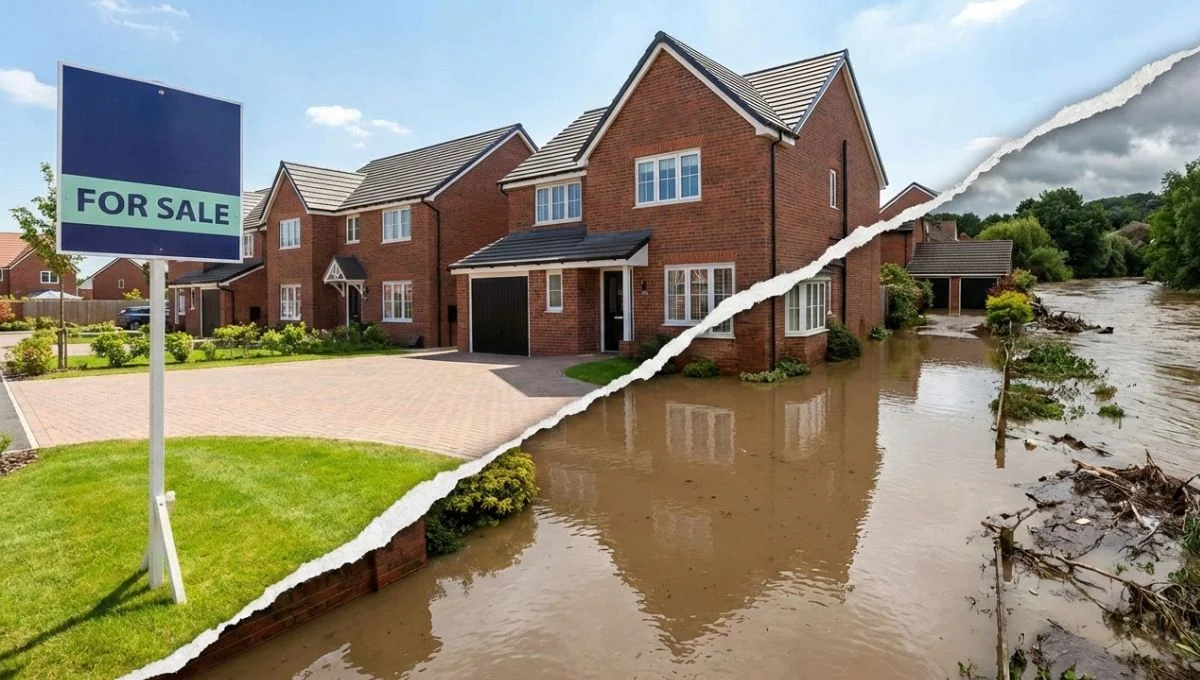
According to startling new data from the insurer Aviva, one in nine new homes built in England between 2022 and 2024 were plonked straight into areas that are currently at risk of flooding.
Even more worrying? That number is creeping up. Between 2013 and 2022, it was one in 13. As the push to build 1.5 million new homes accelerates, it seems we are building our way into a rather soggy corner.
The Insurance Nightmare You Didn't See Coming
Here is the biggest catch for anyone looking at a modern estate: if your home was built after 2009, you are completely excluded from the government-backed 'Flood Re' scheme.
This scheme was designed to keep flood insurance affordable for homeowners in risky areas. But because new builds are left out of it—originally as a deterrent to stop developers building on flood plains—anyone buying a modern home in a high-risk area is essentially left to face the open insurance market.
If you are flooded, the financial hit is brutal. The Association of British Insurers (ABI) has just revealed that the average flood payout to a homeowner has jumped by 60%, hitting a staggering £30,000. Overall, domestic flood claims skyrocketed to £312m last year alone.
Where Are The Riskiest Postcodes?
If you think this is just a rural problem, think again. The data cross-referenced new addresses with the Environment Agency’s flood risk assessments, and the hotspots might surprise you:
-
Greater London and Essex: Sitting at the top of the table, a massive 32% of new properties here are classed as at-risk.
-
Lincolnshire, East Yorkshire, and the North-West: Following behind, with 13% of new homes in the danger zone.
-
The East of England: Currently the safest bet, with just 2% of new properties at risk.
By 2050, as our climate continues to change and extreme rainfall becomes the norm, almost a third (30%) of the homes built in the last two years will face some kind of flood risk.
Is the Government Doing Anything?
The government insists that these figures are a bit misleading because they don't factor in the flood defences already protecting these towns. A spokesperson recently highlighted their £10.5bn investment into flood projects, promising to protect nearly 900,000 properties by 2036.
However, Aviva strongly disputes this, arguing that their analysis absolutely does take existing flood defences into account.
And the reality on the ground is already painting a grim picture. In places like Ynysybwl in Wales and Tenbury Wells, some residents are slowly abandoning their towns simply because they can no longer get their homes insured against the constant threat of water.
What Happens Next?
Emma Howard Boyd, former chair of the Environment Agency, has warned that the sheer pressure to meet housing targets could force even more development onto floodplains.
Industry experts are now begging for stronger planning regulations. Jason Storah, Aviva’s chief executive of UK general insurance, put it bluntly: "In some areas, it will not be a case of if but when a home will flood."
So, if you are browsing Rightmove this weekend for a shiny new-build, do yourself a massive favour. Before you look at the kitchen fittings or the size of the garden, check the local flood map. It might just save you from a £30,000 headache.